Best Things to Do in Austin: A Local's Guide
From swimming holes and bat colonies to the barbecue lines and back rooms that outlasted every boom, a local's real itinerary for the city that keeps changing underneath itself.
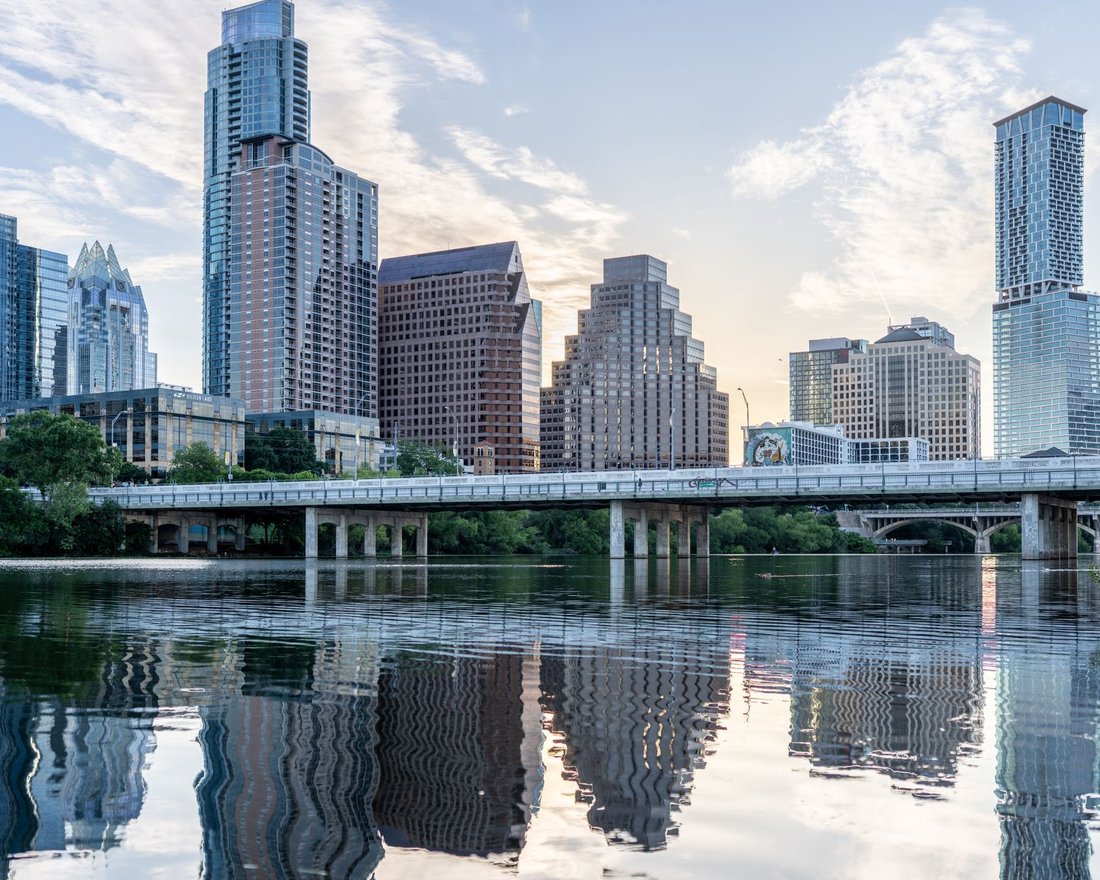
By 6:45 on a Tuesday morning, the parking lot at Barton Springs is already half full. A retired schoolteacher does slow laps along the rope line. A line cook who just finished a double floats on his back for twenty minutes before driving home to sleep through the heat of the day. Nobody here is taking a photo. This is what the best things to do in Austin actually look like on an ordinary week: unglamorous, a little ritualistic, done by people who live here and would rather not explain themselves to a stranger with a selfie stick.
That tension runs through this whole city. Austin is still, underneath the cranes and the corporate shuttle buses, the scrappy college town that grew a music scene out of cheap rent and long nights. It is also, unmistakably, a place where a two-bedroom bungalow in East Austin now costs what a small ranch cost twenty years ago. Both things are true at once, and the good news for a visitor is that most of what made Austin worth loving in the first place is still here, still mostly free, and still best experienced the way locals experience it: outdoors, unhurried, and not on 6th Street.
Best Things to Do in Austin When the Heat Is On
Austin summers run long and mean, which is exactly why the city organized so much of its culture around water. Locals plan entire weekends around where the shade is and how cold the creek runs, and the four spots below are less "attractions" than they are load-bearing parts of daily life here.
Barton Springs Pool
This is a three-acre spring-fed pool inside Zilker Park that holds steady around 68 degrees no matter what the thermometer says outside, which in August is either a mercy or a shock depending on how brave you're feeling on the first step in. It was carved by Barton Creek long before anyone thought to put a fence around it, and swimming here still feels closer to a creek than a municipal pool, with a silty bottom, turtles that mind their own business, and a lawn that fills with people reading paperbacks and pretending not to nap. Get there early on a weekend, because by ten the line for parking backs up onto the access road. Insider tip: the unfenced, unofficial stretch downstream, known to regulars as Barking Springs, is free, dog-friendly, and usually far less crowded.
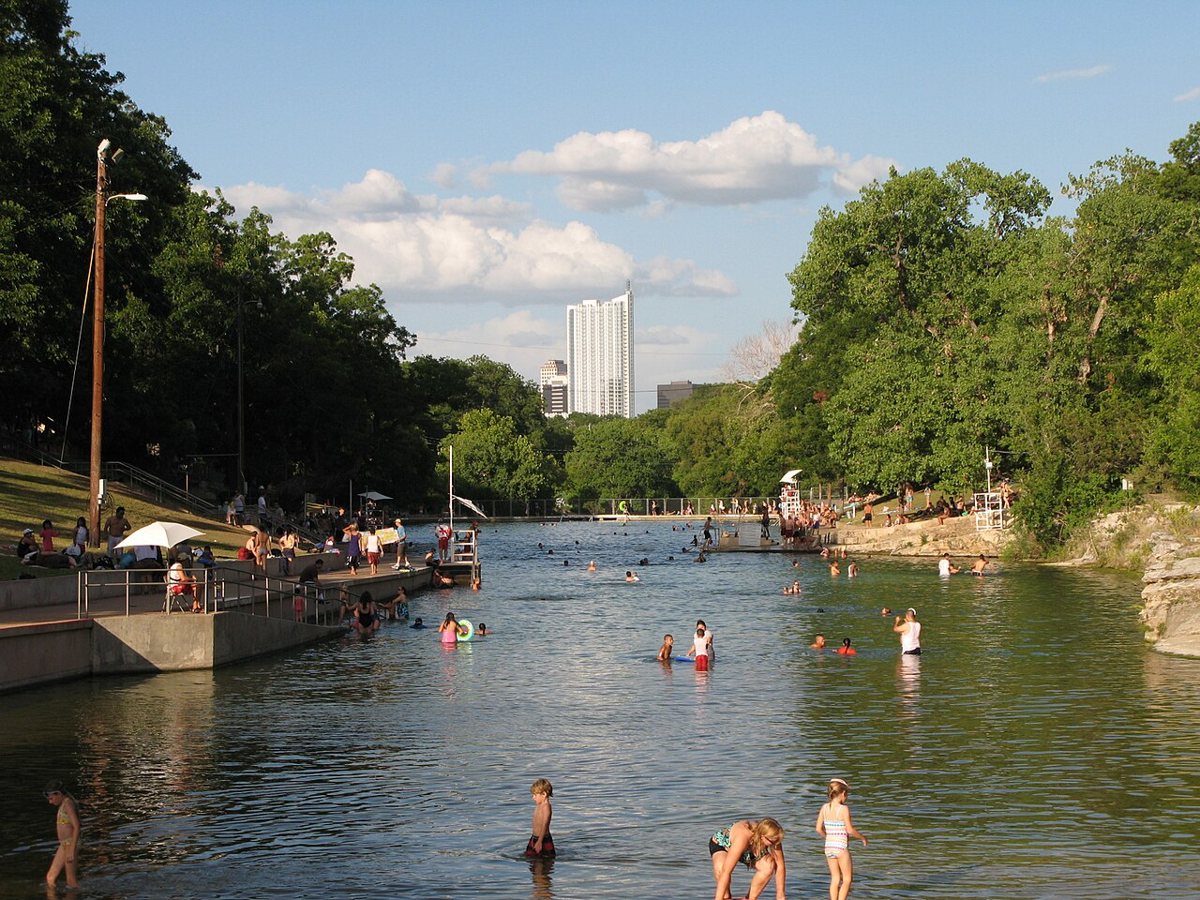

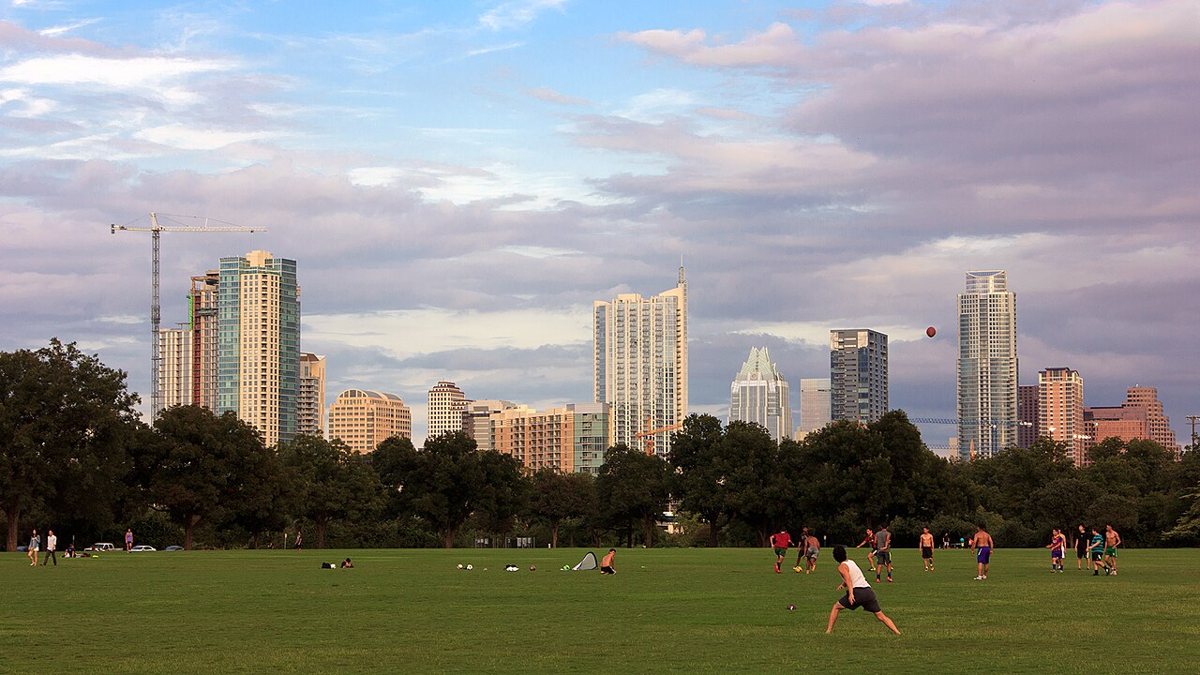
Zilker Park itself, one of the city's great public green spaces, is the reason Barton Springs has company. It's the green lung of the city, a few hundred acres that host the annual kite festival, free outdoor movies and concerts through the Blues on the Green series, and enough open lawn to throw a frisbee without hitting anyone. Families come for the Zilker Zephyr miniature train and the botanical garden tucked into one corner; runners use it as the western anchor of the Lady Bird Lake trail. What makes it work as a piece of a day rather than a single stop is how many other things sit inside or right next to it: the springs, the disc golf course, the hillside where half the city seems to gather for sunset in October when the heat finally breaks. Go on a weekday if you want it closer to empty.

Barton Creek Greenbelt
The Greenbelt is what Austinites mean when they talk about the Hill Country being close enough to touch. It's roughly seven miles of limestone trail cut along Barton Creek, with swimming holes at Twin Falls and Sculpture Falls that only run when rainfall has been decent, which is worth checking before you commit to the hike in. The trail itself is shaded, rocky in spots, and popular with climbers who work the bluffs above the creek bed. The Greenbelt is the Austin that predates the tech boom by geologic time, and walking it after a good rain, with the water actually moving and cool air coming up off the creek, is as close as the city gets to a wilderness experience without leaving the city limits. Wear real shoes. The limestone gets slick, and cell service disappears in the canyon sections.
Lady Bird Lake
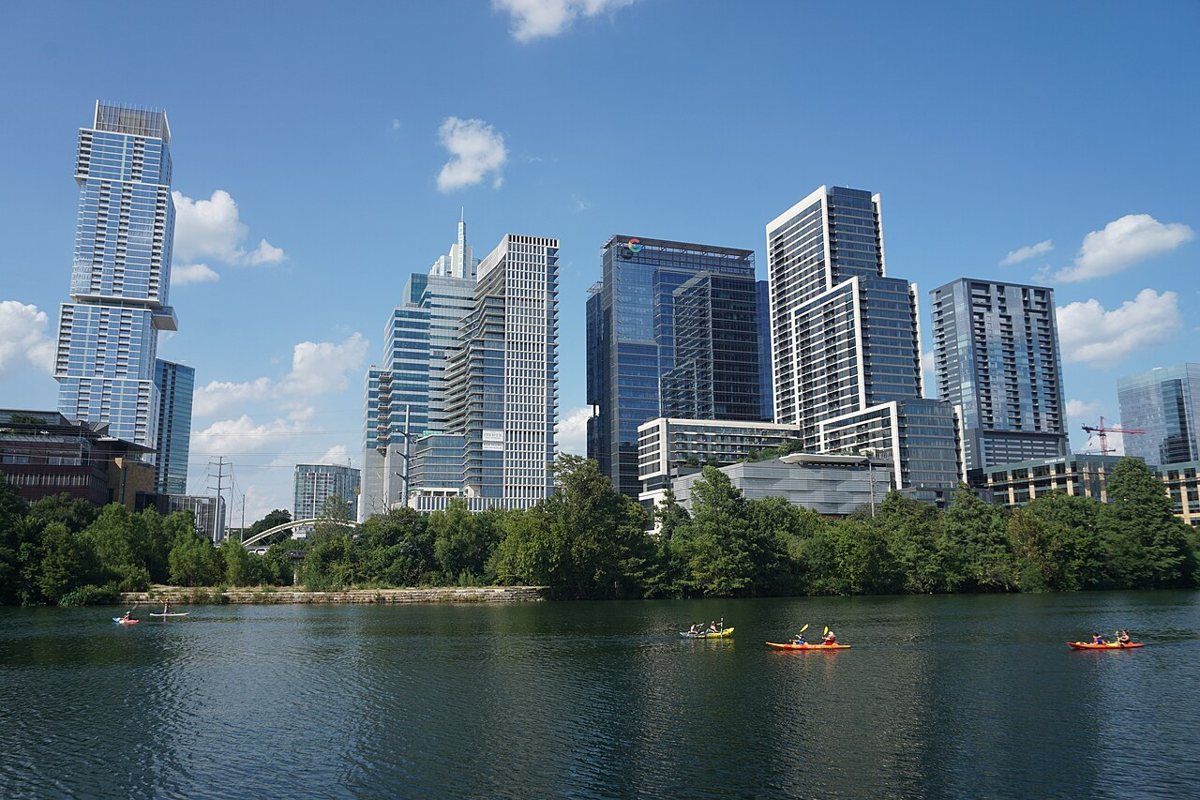
Technically a dammed section of the Colorado River, Lady Bird Lake functions as downtown Austin's front yard. A ten-mile hike-and-bike trail loops the water, packed at dusk with runners, dog walkers, and people pushing strollers past the boardwalk that hangs out over the water near the Four Seasons. Rent a kayak or a stand-up paddleboard from one of the outfitters near the south shore and you can paddle right up under the Congress Avenue Bridge, which happens to be the best seat in town for what comes next. No motorized boat traffic is allowed on most of it, so the water stays calm even when downtown is anything but. Insider tip: the trail's least crowded stretch is on the east side past I-35, where it's quieter and the skyline view back toward downtown is better anyway.

The Bats, the Capitol, and the Drag
A few Austin experiences don't fit neatly into "outdoors" or "downtown." They're their own category, the kind of thing you end up describing to people back home in more detail than you planned.
Congress Avenue Bridge Bats
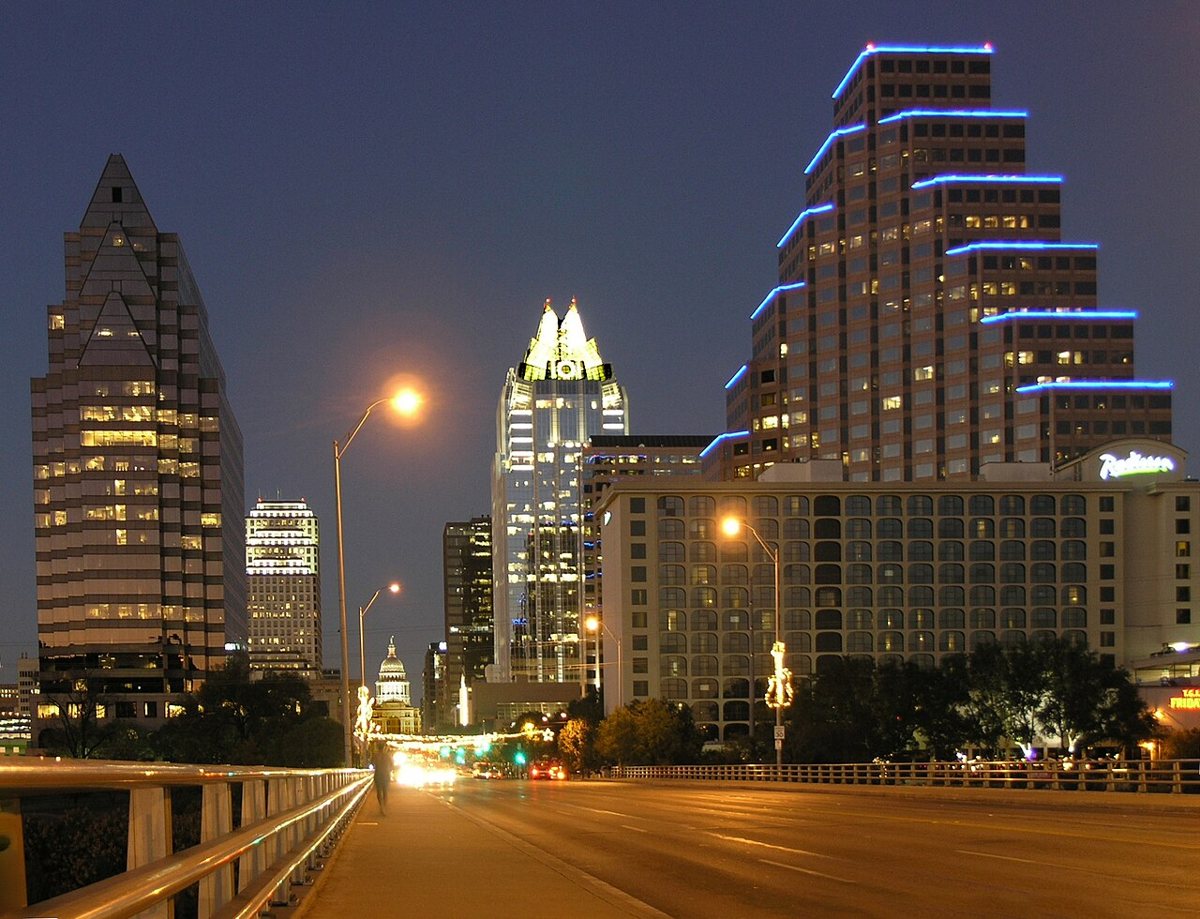
Every evening between roughly March and October, somewhere between 750,000 and a million and a half Mexican free-tailed bats pour out from underneath the Congress Avenue Bridge and stream south over the lake to feed. Nobody built this on purpose. The bats moved in after the bridge was renovated in the 1980s, alarmed the neighborhood, and then became one of the more beloved things about the city once people realized the bats were eating an extraordinary volume of insects and hurting no one. Watch from the bridge itself, from the grassy bat observation area on the south bank, or by kayak on the lake, which is the best angle if you don't mind bat guano being a theoretical possibility. Timing is everything and it shifts by the week, so check a current bat forecast the day of rather than guessing.

Texas State Capitol
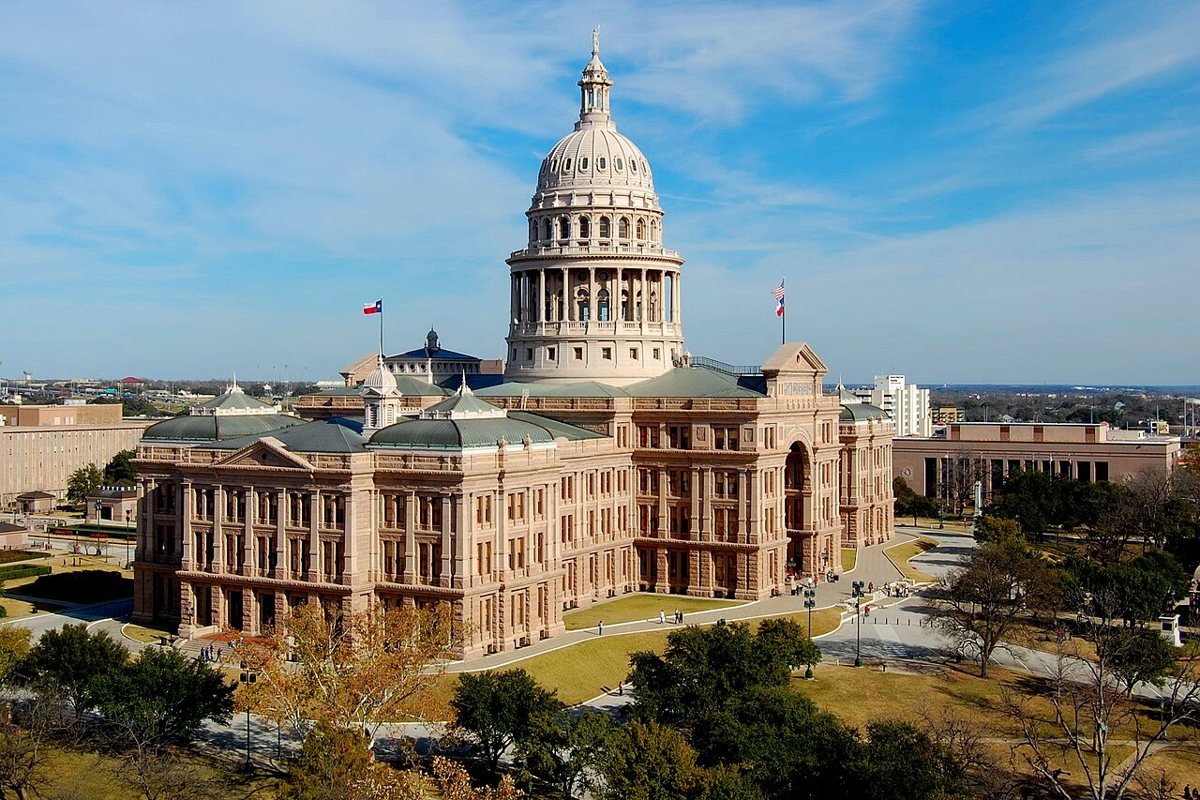
Built from pink granite quarried in Marble Falls and finished in 1888, the Texas Capitol is taller than the U.S. Capitol, a fact Texans will mention within about four minutes of any conversation about it. It sits at the top of Congress Avenue, which means the whole downtown grid was laid out to point straight at it, and you can feel that on foot walking north from the river. Self-guided tours are free and the building stays open on weekdays with limited hours on weekends, so check the current schedule before you go. Inside, the rotunda floor has a terrazzo seal worth looking down for, not just up. The grounds are shaded by live oaks and worth a slow lap even if you skip the interior entirely.

The University of Texas Tower and the Drag
The Tower anchors the UT Austin campus and lights up in burnt orange after Longhorn wins, a tradition that turns the skyline into a scoreboard on fall Saturdays. Below it, Guadalupe Street runs along the west edge of campus and everyone who's lived here more than a semester just calls it the Drag, never anything more formal. It's scruffier than the rest of downtown on purpose, lined with used bookstores, cheap eats, and the kind of head shops and taco counters that have outlasted several redevelopment attempts. Walk it in the late afternoon when class lets out and you'll get a better read on the college-town half of Austin's identity than anywhere else in the city.
Where the Music Still Lives
People who've never spent a night here assume the Austin music scene means 6th Street, and locals mostly wince at that. 6th Street downtown is bachelorette parties and cover bands playing to a captive audience of tourists. The real thing happens elsewhere, quieter about itself and better for it.
Continental Club
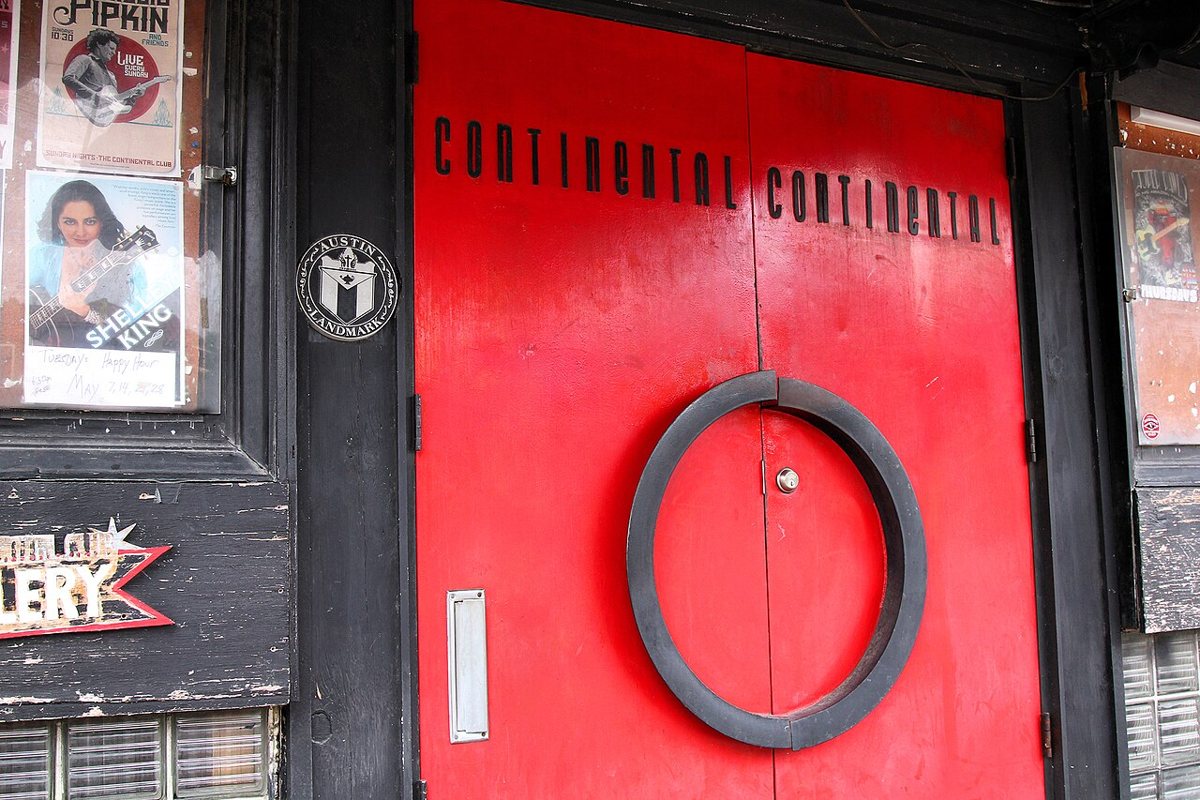
Open since the 1950s and a live-music fixture on South Congress since the 1980s, the Continental Club is a low-ceilinged, red-vinyl room that has hosted more legendary Austin nights than almost any other stage in the city. It's small enough that there's no bad spot in the room, and the Tuesday night residencies here have outlived multiple owners, multiple booms, and at least one recession. The room is where you go to understand why musicians move to Austin instead of Nashville or LA: lower stakes, better crowds, a scene that still rewards a band that's simply good rather than one that's merely marketable. Get there early. The room rarely has a bad seat, but it rarely has an open one either once the crowd arrives.

Stubb's and the Red River Corridor
If Austin's music scene has a spine, it runs along Red River Street and the blocks around it in East Austin, not down on 6th. Stubb's, part barbecue restaurant and part amphitheater with a full calendar of touring and local acts, sits right at the edge of that corridor and has for decades been where national acts play rooms small enough to still feel like a discovery. Walk a few blocks in either direction on a weekend night and you'll pass half a dozen smaller clubs booking everything from punk to Tejano to whatever strange new genre a college band invented that month. This is the neighborhood where Austin's claim to being the Live Music Capital of the World actually gets tested and actually holds up.
Eating Like You Live Here
Food in Austin isn't a tourist activity layered on top of the real city. It's the daily infrastructure, and skipping it means missing half of what the city is.
Breakfast Tacos
In most places, tacos are dinner. In Austin, they're a morning ritual, ordered from a gas station counter or a walk-up window on the way to work, wrapped in foil, eaten one-handed at a stoplight. No single filling counts as correct, though migas, potato and egg, and weekend barbacoa all have loyal constituencies, and every longtime resident has a specific order at a specific spot that they will defend past the point of reason. If you want to actually understand the city's daily rhythm rather than its tourist highlights, spend one morning tracking down a great breakfast taco instead of a sit-down brunch. There's no landmark to photograph here, just a habit worth adopting for a few days.
Franklin Barbecue
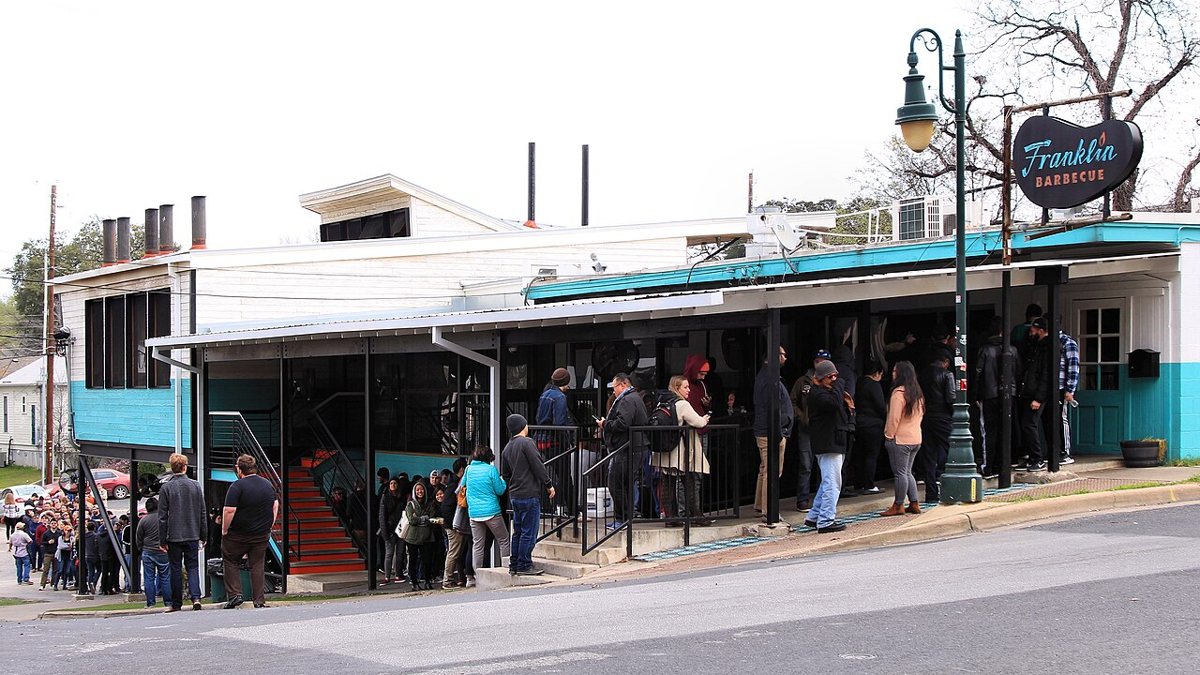
Franklin Barbecue turned a trailer on the side of I-35 into arguably the most famous barbecue restaurant in Texas, and the line that forms outside most mornings is less a marketing stunt than a real reflection of how good the brisket is once you get it. It's slow-smoked over post oak, sliced thick, and served without a drowning pool of sauce, which is the Central Texas way: the meat should be good enough on its own. Whether it's worth the wait is a genuinely personal calculation, and plenty of locals have made peace with skipping it in favor of a proper plate of brisket at one of a dozen other smokehouses around the city with no line at all. If you do go, arrive well before opening and bring cash and patience.

Beyond barbecue, the city runs on Tex-Mex the way other places run on diners, with queso and enchiladas as comfort food rather than special-occasion food, and a frozen margarita culture serious enough that entire bars have built their reputation on one machine. Pair either with a cold Shiner Bock and you've eaten and drunk like an actual Austinite for an evening, no reservation required.
Neighborhoods Worth Wandering
Some of the best afternoons here have no single destination attached to them. They're just a neighborhood and enough time to walk it slowly.
South Congress Avenue
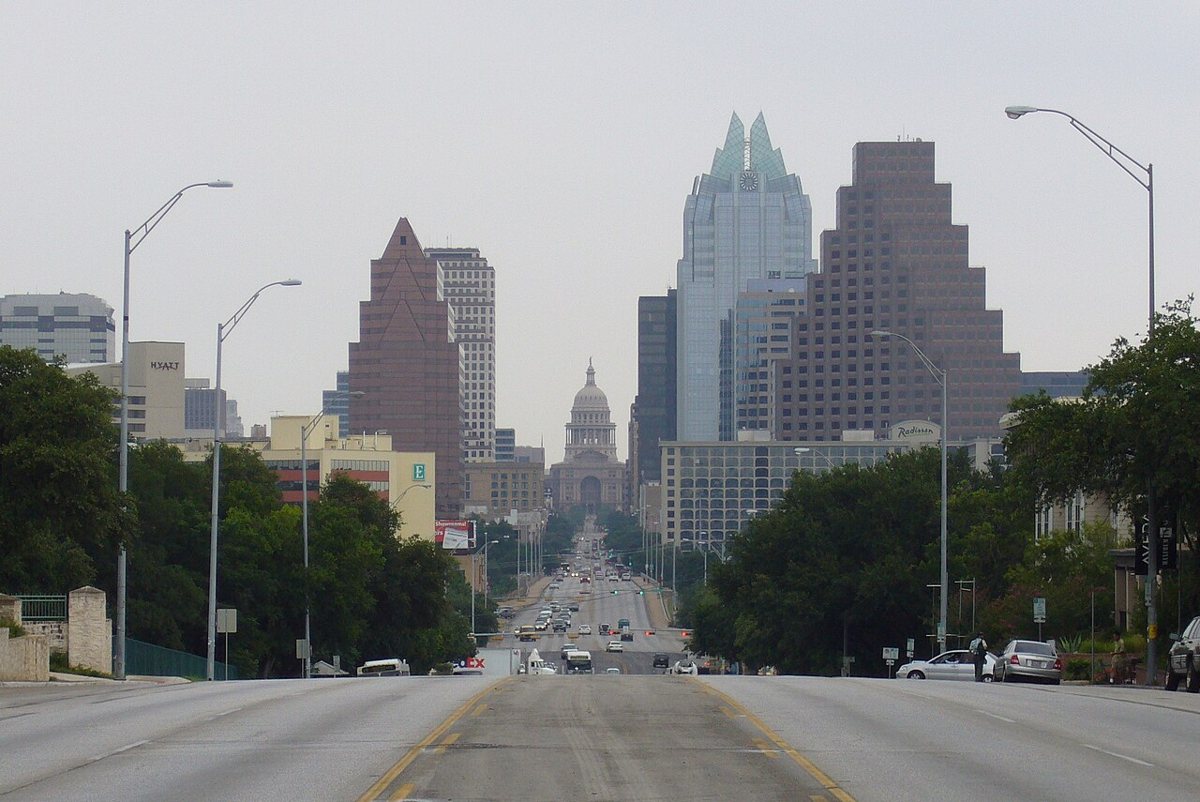
Known universally as SoCo, South Congress runs from the river south past a strip of boutiques, vintage shops, food trailers, and the Continental Club, with the Capitol framed at the far end of the street looking north. It's become one of the more polished corridors in the city, no argument there, but it earned that polish honestly, growing out of a genuinely funky strip of secondhand stores rather than being built as a shopping district from scratch. Walk it in the evening when the heat breaks and the trailers turn their lights on. The Hotel San José's courtyard is worth a slow drink even if you're not staying there.

Hyde Park and North Loop
North of the university, Hyde Park is Austin's oldest planned suburb, full of Victorian and Craftsman houses on quiet, tree-lined streets that feel a world away from downtown traffic. It runs straight into North Loop, a strip of vintage shops, record stores, and a diner or two that has resisted turnover far longer than most retail corridors in the city. Together they're a good antidote to the idea that Austin is only ever new construction and glass towers. Come for a slow walk and a coffee, not a checklist. There's no single landmark here, which is exactly the point.
A Little Elevation and a Little Distance
Austin is flat where it's built up and surprisingly hilly at its edges, and both the following spots reward a short drive out of downtown.
Mount Bonnell
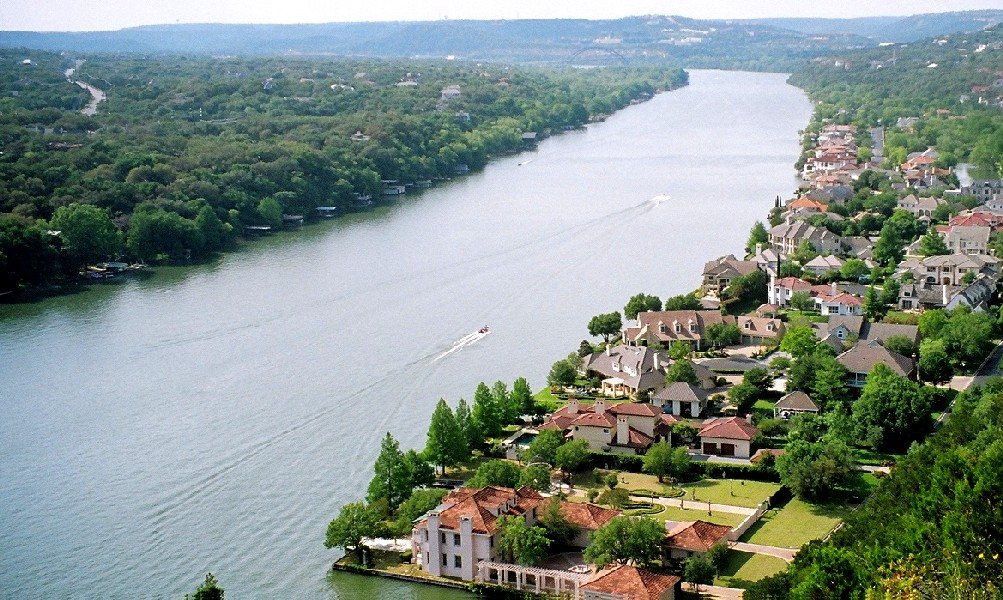
At just over 775 feet above sea level, Mount Bonnell isn't a mountain by any honest definition, but the climb up its roughly hundred stone steps delivers one of the better sunset views in the city, looking down over Lake Austin and the bluffs on either side. It's been a scenic overlook since the 1800s, which means generations of Austinites have already carved initials into the same rocks you'll be standing on. Go in the last hour before sunset and expect company. It's a small summit and a popular one. Bring water, because the steps are steeper than the photos suggest.

McKinney Falls State Park
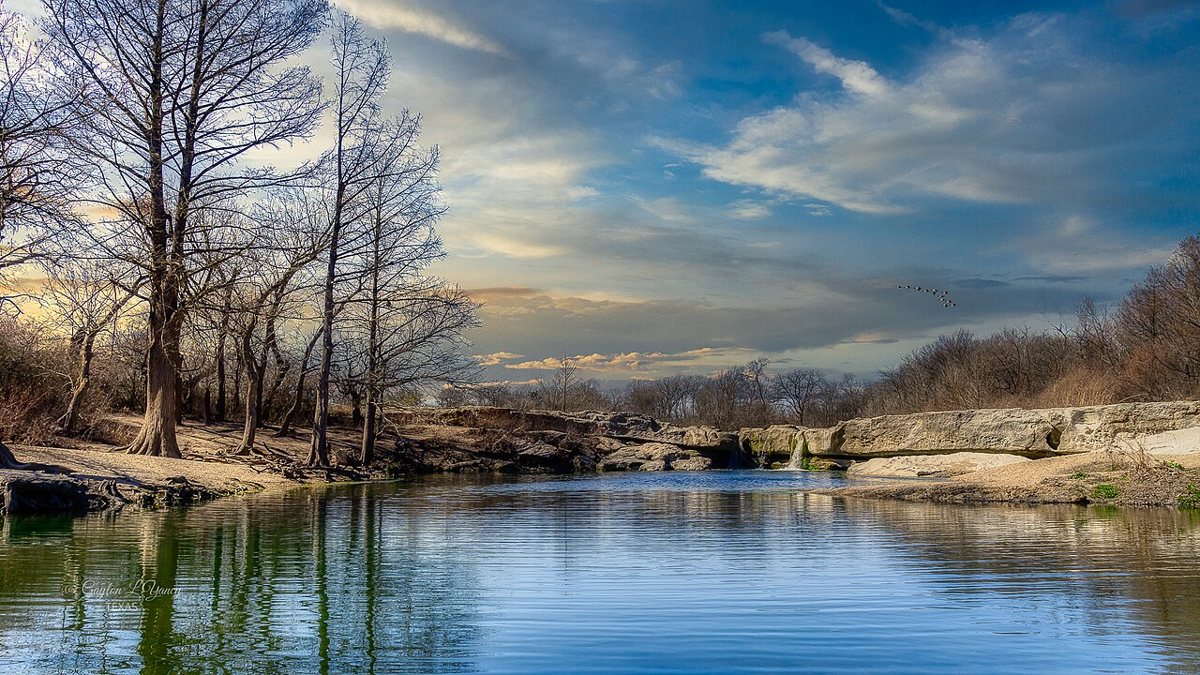
Fifteen minutes from downtown, McKinney Falls has two sets of limestone waterfalls, miles of hike-and-bike trail, and a swimming hole that draws a fraction of the crowd Barton Springs does, mostly because most tourists never hear about it. Onion Creek carved these falls long before Austin existed, and the park still has the ruins of an old homestead and gristmill if you want a little history mixed in with the scenery. It's a solid choice on a weekend when the Greenbelt and Barton Springs are both slammed and you just want water and quiet. A day-use fee applies, so check current rates before you go.

The Practical Stuff
None of the above works if you're stuck in traffic, so a little planning goes a long way in this city.
- Traffic here is a genuine problem, not an exaggeration. I-35 through downtown and MoPac at rush hour can turn a fifteen-minute drive into an hour, so build in buffer time and avoid driving between roughly 4 and 6:30 on weekday afternoons if you can help it.
- Rideshares and scooters cover downtown and the university area well, but the Greenbelt, Mount Bonnell, and McKinney Falls really do need a car.
- Mornings are the move for anything outdoors in summer. Heat builds fast after 10 a.m. and the water spots get crowded right along with it.
- A lot of the best of Austin costs nothing: the Capitol grounds, the hike-and-bike trail, the bat watch, most of the Greenbelt, and Blues on the Green concerts in season.
- If you're timing a trip around South by Southwest, know that plenty of longtime residents deliberately leave town that week. It's a fine time to visit for the festival itself, but it isn't a preview of normal Austin.
What Austin actually is depends on who you ask and when you asked them, and anyone who's been here since before the skyline changed will tell you that with a little sadness mixed into the pride. The swimming holes are still cold, the brisket is still smoked over post oak, and the Continental Club still fills up on a Tuesday. The tech money bought a lot of new buildings and it hasn't yet managed to buy the habits. Go to the springs before work. Eat the taco standing up. Skip 6th Street and walk Red River instead. That's the whole guide, really: the city rewards people who slow down enough to live in it for a few days instead of just visiting it.